

Great Migration Tanzania Safari Experience
A Great Migration Tanzania Safari Experience takes you into the heart of the Serengeti, where millions of wildebeest, zebras, and gazelles move across the vast plains in search of fresh grazing and water.
This remarkable natural cycle unfolds throughout the year, with different regions of the Serengeti offering different migration experiences. From the dramatic wildebeest calving season in southern Serengeti to the spectacular Mara River crossings in northern Serengeti, every stage offers its own unforgettable wildlife encounters.
At Bush Paws Safaris, we design Great Migration safaris around the timing and location of the herds, combining expert local guiding, carefully selected accommodation, private safari experiences, and flexible itineraries.
Explore the legendary Serengeti National Park, follow the migration through the Western Corridor and Northern Serengeti, and experience the incredible predator activity that follows the moving herds.
This is more than a safari. It is a front-row seat to one of the world's greatest wildlife spectacles.
What Is the Great Migration?
The Great Migration is the annual movement of enormous herds of wildebeest, zebras, and other grazing animals through the Serengeti-Mara ecosystem of Tanzania and Kenya.
The migration is driven primarily by rainfall, fresh grass, and the search for water. Rather than being a single event that happens on one particular date, it is a continuous cycle that moves through different parts of the ecosystem throughout the year.
The Serengeti is at the heart of this extraordinary natural phenomenon. UNESCO describes the annual migration of vast herds of wildebeest, gazelles, and zebras, accompanied by predators, as one of the world's most impressive natural spectacles.
The Great Migration Cycle
-
January – March: Calving season in the southern Serengeti
-
April – June: Herds begin moving north through the central and western Serengeti
-
June – July: Migration reaches the Western Corridor and Grumeti River region
-
August – September: Major Mara River crossing period in Northern Serengeti
-
October – November: Herds begin their journey south
-
December: Herds return toward the southern Serengeti
Exact timing changes from year to year because the migration follows rainfall rather than a fixed calendar.

Where Does the Great Migration Take Place?
The Great Migration moves through the wider Serengeti-Mara ecosystem, with the majority of the journey taking place within Tanzania's Serengeti ecosystem.
For travelers choosing a Tanzania Great Migration safari, the most important areas include the Southern Serengeti, Central Serengeti, Western Corridor, and Northern Serengeti.
Southern Serengeti – The Great Wildebeest Calving Season
The southern Serengeti is one of the most exciting places to experience the migration during the calving season.
During approximately January to March, large numbers of wildebeest gather on the nutrient-rich grasslands, where thousands of calves are born.
The abundance of young animals also attracts predators, creating exceptional opportunities to observe lions, cheetahs, hyenas, and other predators in action.
Highlights
-
Wildebeest calving season
-
Large concentrations of wildebeest
-
Newborn calves
-
Intense predator activity
-
Excellent photography opportunities
-
Beautiful green landscapes
Best for: Wildlife photographers, families, first-time migration travelers, and visitors interested in predator-prey interactions.
The southern Serengeti and adjoining Ngorongoro ecosystem are particularly important during the calving period.
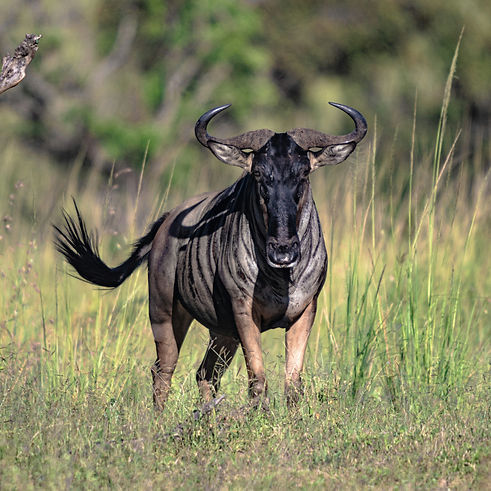

Central Serengeti – Follow the Herds Across the Plains
Central Serengeti provides an excellent year-round safari environment and is an important part of the migration route.
As the herds move north, they pass through the central Serengeti, creating opportunities to see enormous groups of wildebeest and zebra alongside resident wildlife.
The area is also famous for its big cats, including lions, leopards, and cheetahs.
Highlights
-
Moving wildebeest and zebra herds
-
Excellent year-round wildlife
-
Lion and leopard sightings
-
Beautiful Serengeti plains
-
Predator activity
-
Excellent game drives
Best for: First-time safari travelers, wildlife lovers, photographers, and travelers wanting to combine the Great Migration with a classic Serengeti safari.
Western Serengeti – The Grumeti River Migration
As the migration moves north and west, the herds reach the Western Corridor and Grumeti River region.
This stage of the migration can provide dramatic wildlife encounters as animals navigate river crossings and continue toward the northern Serengeti.
The Western Corridor can also offer a more remote safari atmosphere compared with some of the busiest migration areas.
Highlights
-
Grumeti River region
-
Large wildebeest herds
-
Zebra and other grazing animals
-
Predator activity
-
Beautiful Western Serengeti landscapes
-
Opportunities for river-crossing experiences
Best for: Experienced safari travelers, photographers, and travelers looking for a less conventional Great Migration experience.
The Grumeti crossings generally occur earlier than the famous Mara River crossings, although exact timing varies with rainfall and herd movement.


Northern Serengeti – The Mara River Crossings
For many travelers, the Mara River crossings represent the most dramatic chapter of the Great Migration.
From roughly August to October, migrating herds can reach the Northern Serengeti and gather around the Mara River.
The sight of wildebeest and zebra approaching the river, hesitating at the banks, and sometimes plunging into the water can be an extraordinary wildlife experience.
However, river crossings are completely natural and unpredictable. The animals may cross quickly, wait for hours or days, or turn back. A crossing can never be guaranteed.
Highlights
-
Mara River crossings
-
Huge wildebeest herds
-
Zebra migration
-
Crocodile-filled waters
-
Intense predator activity
-
Dramatic wildlife photography
-
Northern Serengeti wilderness
Best for: Experienced safari travelers, photographers, wildlife enthusiasts, and travelers specifically seeking the famous Mara River experience.
Mara River crossings generally peak around August and September, with opportunities sometimes continuing into October
Best Time for the Great Migration in Tanzania
There is no single "best month" for the Great Migration because the migration is a continuous natural cycle.
The best time depends on which part of the migration you want to experience.
January to March – Calving Season
The southern Serengeti becomes an incredible nursery during the calving season.
Large numbers of wildebeest give birth, attracting predators and creating excellent opportunities for wildlife photography.
Why travel during this period?
-
Wildebeest calving
-
Newborn animals
-
Intense predator activity
-
Green landscapes
-
Excellent photography
-
Large wildlife concentrations
April to June – Migration Moves North
After the calving season, the herds gradually begin moving north and west as conditions change.
This period can provide excellent wildlife experiences while some areas may see fewer visitors than the peak migration months.
Why travel during this period?
-
Herds moving through the Serengeti
-
Green scenery
-
Good wildlife viewing
-
Potentially fewer visitors
-
Excellent photographic landscapes
June to July – Western Corridor & Grumeti River
The migration reaches the Western Corridor, where the Grumeti River becomes an important part of the journey.
This is an excellent period for travelers who want to experience the migration before the major Northern Serengeti river-crossing season.
Why travel during this period?
-
Grumeti River region
-
Large migrating herds
-
Predator activity
-
Western Serengeti landscapes
-
Fewer crowds in some areas
August to September – Mara River Crossings
For travelers dreaming of the famous river-crossing experience, August and September are among the most popular months to visit Northern Serengeti.
The herds gather around the Mara River, creating the possibility of dramatic crossings.
Why travel during this period?
-
Mara River crossing opportunities
-
Huge wildebeest concentrations
-
Zebra herds
-
Predator activity
-
Excellent wildlife photography
-
Dry-season safari conditions
River crossings remain unpredictable, so travelers should plan around a period rather than expecting a crossing on a specific day.
October to December – The Journey South
After spending time in the northern areas, the herds gradually begin moving south as rainfall changes the availability of fresh grazing.
This stage offers a different perspective on the migration, with large herds moving through the Serengeti landscapes.
Why travel during this period?
-
Migration return journey
-
Changing Serengeti landscapes
-
Wildlife viewing
-
Fewer visitors in some areas
-
Opportunity for a quieter safari
Let's plan your Tanzania story.
Tell us roughly when you'd like to travel and what you're hoping to see — a planner will reply with a first-draft itinerary and pricing.
-
✎Free to ask — no obligation quote and draft route.
-
☏Direct contact — speak with your actual trip planner.
-
◆Fast reply — most enquiries answered within one business day